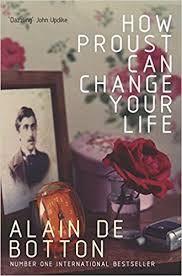
How Proust Can Change Your Life – Alain De Botton

download (1)

Proust did not change my life

I really like Alain De Botton, I have thoroughly enjoyed everything I have read of his from Essays In Love to The Architecture of Happiness. I really respect him and think he is a very clever man who writes beautifully. He is very thought-provoking and extremely clever but in a way that is so simple you almost don’t realise. That being said, I did not enjoy this book at all.

For me, and perhaps this comes from the perspective of a literature student, I felt he was dabbling in a sphere he knew nothing about. Namely, the analysis of literature. I found the novel very frustrating and, therefore, learnt absolutely nothing from Proust and did not have my life changed.

For me, the first rule of literature or, indeed, art as a whole, is just because someone writes it/draws it/ directs it doesn’t mean they are it. If an author writes a depressed character, this does not mean that that character is a representation of their self. In the same way that if an author writes a serial-killer, this does not mean that they are a serial-killer. It is a very simplistic analysis of literature to go ‘oh that character is really struggling with their self-worth, therefore, the author must have struggled with his sense of self-worth too’. De Botton does not seem to know this rule – he takes passages from Proust’s book A Search In Lost Time and makes sweeping conclusions that seem to be entirely unfounded other than in speculation.

I had a massive issue with the chapter titled ‘How to suffer successfully’. This chapter drew the conclusion that suffering is what makes you knowledgeable. Of course, to a certain extent, this is true however this entirely glorifies and ennobles depression. As someone who has, in the past, fallen into the trap of romanticising a stoic depression which is both a blessing and a curse because it makes you a deeper soul – I completely disagree with this notion. Here is a direct quote from the book:

“It seems that knowledge has usually been the privileged preserve of, and the only blessing granted to, the violently miserable.”

This is a very very bad lesson to be teaching people and if it changes their life, it will only be for the worse. De Botton goes onto explain that he is not romanticising depression whilst continuing to do exactly that. The chapter then finishes with De Botton taking the woes of some of Proust’s fictional characters and comparing them to Proust’s own woes and how he dealt with them, only to reach the conclusion that “Proust’s approach to his own grief seems rather admirable”. I cannot understand the relevance of this – they are fictional characters…

The chapter on friendship wasn’t much better and led me to believe that neither Proust, nor De Botton had ever experienced true friendships. The chapter describes false-amiabilities and friendships where you can’t be honest with how you feel and what you think, not my understanding of true friendship. That being said, it does make some good points about the value of listening and not talking in a friendship.

Three last things that I will complain about:

One – De Botton makes a point that there are, of course, superior people in the world. This is a very throwaway comment that I do not entirely agree with. Are there, of course, superior people in the world? I would have thought that, as a philosopher, he would’ve interrogated that sweeping statement further.

Two – The conclusion that the secret to long-lasting relationships is jealousy. When reading this book, I wrote down notes for reference when it came to writing this blog post – the note at this point just said  “Are you fucking kidding me?!?!!”. Again, a  very unhealthy lesson to be teaching the readers of this book. In my, admittedly very little, experience, jealousy is the secret to very short and toxic relationships.

Three – Lastly the whole set-up of the book is too simplistic for me – each chapter ends with “the moral” as though there should always be a moral to every story.

As I have said, I really like and respect Alain De Botton and I will continue to read his work and, hopefully, continue to thoroughly enjoy his writing. I would like to think that How Proust Can Change Your Life is an anomaly. It seems to be a case of someone delving into a sector that they don’t have a lot of experience in, as well as, a little bit of trying to be too clever and too knowledgeable. The whole book is pretty much speculation and whilst I know I have been terribly scathing, I do have to say, if this were graded in an English Literature university module, I can’t imagine that it would get higher than a 2.2.


So, How Proust Can Change Your Life in three words:

Superficial, ill-informed, speculation
 Deadpool 2 – David Leitch

download


It’s no Deadpool 1

I was a big fan of Deadpool, it’s exactly the sort of extreme violence, controversially funny, third-wall breaking film that I would like so, as you can imagine, I was very excited for Deadpool 2.

Deadpool 2 is Deadpool 1 (aka Deadpool) but with more money. In many ways, that’s not really a good thing – once a film has more money to spend on special effects and big-budget action, this generally compromises with the character portrayal. In this instance, I actually don’t think this is the case, probably because the film is entirely built on Wade Wilson/Deadpool’s unique, bold and funny character.

In truth, I think there were a lot of negatives with this film:

-It was very long

-It did get a bit ‘big-budget action film’ at points

-The emotional element is a little bit questionable, it doesn’t feel quite right within the film and is also a little unnecessary

-Whilst we have some badass female characters, it really is just the Deadpool show

Despite all of this, I have to say, I really enjoyed it. I laughed way more than I have laughed at any other films recently – the opening credits were possibly my favourite part of the film, but the closing credits are a close competitor. Domino was a complete badass superhero and I thoroughly enjoyed the addition of her to the film as well as the concept of luck being a superpower (or not as Deadpool would argue).

All in all, with Deadpool you know what you’re going to get. It doesn’t pretend to be anything its not and it does what it says on the tin. Therefore, I don’t have a lot to say about it because if you enjoyed the first one, you’ll enjoy the second one, just maybe not quite as much.


So, Deadpool 2 in three words:

Funny, bold, enjoyable


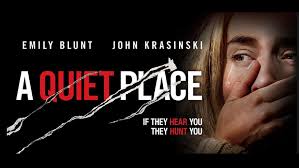
A Quiet Place – John Krasinski

images (1)

I am so happy I made an exception to my horror-avoidance rule  

When I first saw the trailer for A Quiet Place, my initial reaction was – ‘that looks a little bit naff’ and ‘couldn’t they have tried a smidge harder with the name?’. I don’t really know who John Krasinski is but I know that he is in the American version of The Office, which I refuse to watch because why would you take a British comedy and just redo it with Americans? I then learnt that A Quiet Place was supposed to be very very good.

It is my understanding is that A Quiet Place is considered a horror film and I categorically do not watch horror.  Since a child I have learnt that it’s just better to resist temptation and avoid horror at all costs. For A Quiet Place, I made an exception to the rule (as I also plan to do so for Get Out) and I was not disappointed. I would urge everyone to see it, whether you’re a horror fan or phobe. It is definitely scary but not in the sort of – can’t sleep for 3 weeks and have to check the wardrobe – kind of way, in the – gripping onto your chair, holding your breath, heart pounding, emotionally invested – sort of way.

For me, the is film is a riposte to the huge (to quote my favourite film critic, Mark Kermode) SMASH SMASH BANG BANG CRASH CRASH blockbuster action films of today. And don’t get me wrong, I love SMASH SMASH BANG BANG CRASH CRASH but A Quiet Place does something truly special – it reminds us of the power of silence. And, more than that, it silences whole cinemas – a true feat. My showing started with a noisy group of friends chatting and laughing behind us with my growing internalised frustration boiling as I thought ‘why are you even here?!’. Ten minutes into the film, the audience, as a collective, were not making a sound – every single person seemed to be captivated and engrossed and, most importantly, quiet.

This is a film about monsters/aliens/general other beings that hunt by sound – in itself that is just a fascinating and unique concept – I find myself feeling envious that I didn’t think of it first. There is a moment easily overlooked in the opening scene (I completely overlooked this and cannot take the credit for having noticed it myself) where the characters are in a supermarket looking for supplies. It is your typical post-apocalyptic supermarket – ravaged shelves, broken shelf units, littered with leaves – all the aisles have been ransacked, apart from one – the crisp aisle. This just shows the level of the attention to detail throughout the film.

Sure, it has its faults, every film does (apart from In Bruges maybe). There are aspects to the film that I thought were questionable, actions taken by some of the characters that I felt to be unlikely, moments which were clearly incorporated for dramatisation. However, as a whole, I just really think A Quiet Place is an amazing piece of work and an even better watch.


So, A Quiet Place in three words:

Thrilling, engrossing, unique

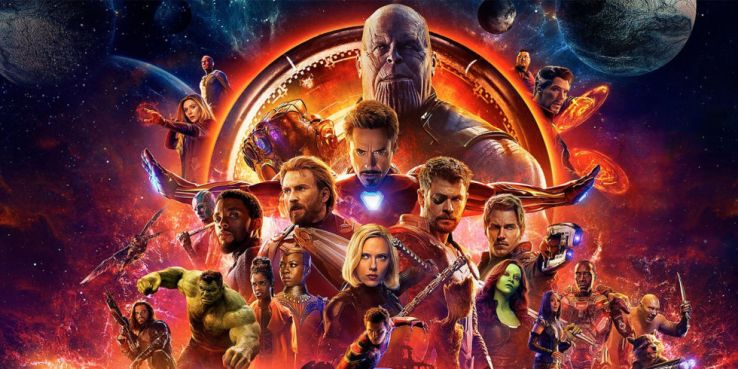
Avengers: Infinity War – The Russo Brothers

landscape-1522924460-avengers-infinity-war-poster

What a load of wank

This is going to be an unpopular opinion but I thought Avengers: Infinity War was wank. It was always going to be a difficult feat to pull together this many storylines and characters in one film and make it successful.

For me, it didn’t work. This is not to say there weren’t moments of promise that I loved and got excited about but these fleeting moments just weren’t enough to save it. There was too much going on – it flitted from place to place, person to person and made no emotional connections. These are characters that I have known and loved over the past 10 years and I found myself entirely uninvested in them or their fates.

*SPOILER ALERT*

A key character dies within the first 2 minutes and it is barely referenced again and completely forgotten about. Later on, more key characters die and I felt almost nothing. That’s a lie, I felt a low-level seething anger from the repeated thought that “this is bullshit”. I felt it was an absolute cop out to just kill key characters and expect the audience to automatically feel something without actually developing an emotional connection throughout the film. Arguably, the emotional connection has been developed over the past 10 years but it’s not just enough to jump straight into deaths and not allow the audience a second to register and grieve.

This is definitely a film for the super fans and, regrettably, I would class myself as a mere fan. I have seen almost all the films (with the exception of having not quite made it to the cinema for Black Panther, unlike the majority of the world it seems!) but have definitely found it difficult to keep up with all the new characters and storylines. I love the Marvel Universe but I also take it with a pinch of salt as a huge money-making venture and not necessarily one made for the art. As a mere fan, I am willing to see and address the weaknesses within the franchise and, unfortunately, Infinity War was weak.

They threw everything at this film – all the money, all the stars, all the CGI. However, these do not and cannot take the place of an emotional connection built with the characters throughout a film.


So, Avengers: Infinity War in three words:

Big-bucks, emotionally sparse


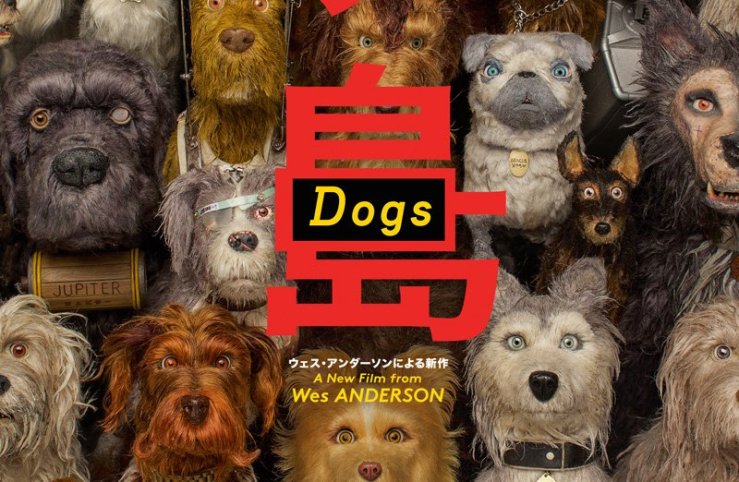
Isle of Dogs – Wes Anderson

isleofdogsheader

I’m going to put it out there, I was disappointed by Isle of Dogs. I love dogs, I love Wes Anderson films, I love stop motion, I love Bryan Cranston – in hindsight, perhaps my expectations were too high.

Don’t get me wrong, Isle of Dogs is a beautiful work of art but, unfortunately, this cannot make up for its lack of story. At the end of the day, film is supposed to be enjoyed, as well as aesthetically appreciated, and when you find yourself sat in a cinema thinking ‘how much longer is this going to go on for’, ‘where is this story going’, ‘well this is a tad self-indulgent’ – that’s not a great film.

It felt a bit like someone had gone ‘an isle full of dogs is in an interesting concept’ and ‘I’ve always wanted to make a film with a Japanese feel’ and then tried to make a story from those two thoughts and it just didn’t quite fit together seamlessly. This is a terrible shame because Wes Anderson’s quaint storytelling style, in my opinion, is usually one of his strongest features.

A concern I had around the film was in its portrayal of Japanese culture – I left the cinema wondering what a Japanese reaction to the film would be. I found myself uncomfortable with the simplification of the culture to basic Sake bottles, cherry blossoms, sumo-wrestling and sushi-making (although it has to be said that the sushi-making scene is utterly stunning). I also found myself wondering how they might feel that the characters that that the audience is directed towards sympathising with, largely speak in English. I will not condemn the Isle of Dogs for its portrayal of the Japanese but I do have to say that it didn’t feel as though it came from someone who had whole-heartedly immersed themselves into Japanese culture and I would be curious to hear an opinion on the film from someone who is Japanese.

My last criticism surrounds the characters in the film, I think we are moving beyond the days where audiences are accepting that they will see (or in this case hear) on their screens, films that don’t give certain sectors within society a voice. I would like to see a Wes Anderson film where a woman plays a more three-dimensional role than a love interest. Arguably, Tracy Walker, the white, blonde human character does this but even so, I would hardly say she was three-dimensional. In any case, this is a film about dogs and the only female dog in it that does any talking is, Nutmeg, a show-dog who is the love interest of Chief.

Isle of Dogs is a beautiful film and I did not dislike it as much as the above would imply. A lot of hard work, effort, time and love went into the making of it and it is certainly an achievement. However, I just think that this was not enough to overcome an incoherent and, to be honest, slightly boring story which just did not have enough substance.


So, Isle of Dogs in three words:

Not enough substance

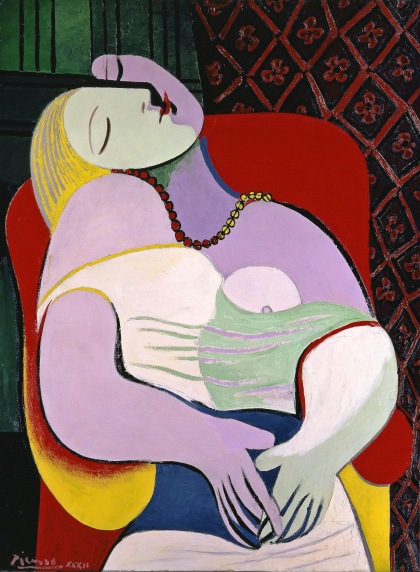
Picasso 1932 – Love, Fame, Tragedy – Tate Modern

pablo_picasso_le_reve_the_dream_1932_collection_particuliere_steve_cohen_copyright_symbol_dacs_2017

I know as much about Picasso as the next person. He was a painter and sculptor, he was Spanish, his work was abstract, his work is often described as surrealist and cubist, he had a lot of different women in his life. So, as you can tell, I’m hardly an expect.

However, I do know that he is one of the most famous artists of the 20th century and that any opportunity to see his work should not be missed. As you can imagine then, London’s Tate Modern exhibition Picasso 1932 – Love, Fame, Tragedy was much awaited and as a loud and proud Tate member, I didn’t have to pay the £22 to get in.

As one might guess from the name, the exhibition focuses on a single year in Picasso’s life – 1932. A prolific year for his work, much of which seemed to have been inspired by his mistress Marie-Thérèse Walter. I really enjoyed the exhibition and I thought it was an interesting approach to what I would assume to be, one of the most discussed and explored artists in recent history. To view a single year of his life and the breadth of his work across that year was highly fascinating, the chronological order of the exhibition also made it really easy to follow.

My personal favourite works of art were the ones that portrayed Walter. Quite dissimilar to his cubist style which is so well known, these paintings are made of sensual and sensitive curves. The figure is often painted lying down, looking down or with her eyes closed and, for me, I felt that I could feel the love and the lust with which these were painted, simply just within a look. There is a way in which Walter comes across as so confidently vulnerable within the paintings that I found incredibly beautiful. Something I loved about the paintings was that, whilst they are so abstract, I immediately get the sense and feeling of every single painting. I understand what I am looking at without quite knowing what every shape means, I get the sense of the painting without fully understanding this artistry – to me, this is what makes him a genius.

My main criticism would be that the exhibition was just too busy, but this can’t really be a criticism of the Tate or the curation as that can only be expected for Picasso at the Tate, in London, on a Sunday. My advice would be, if you have more flexible working hours, try and go in the middle of the week to be able to peruse in peace and quiet at your will.


So, Picasso 1932 – Love Fame, Tragedy in three words:

Insightful, sensual, memorable

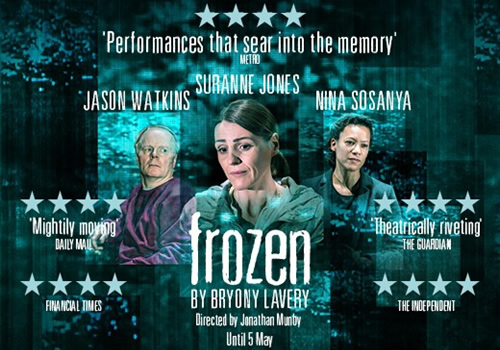
Frozen – Bryony Lavery

frozen

Safe to say that I knew very little about this play prior to entering the theatre. All I knew was that it had Suranne Jones from Doctor Foster in it, that it may or may mot have been about a missing child and that it was definitely, definitely nothing to do with the Disney film.
This is not a play for the faint-hearted and not one that I’d recommend for a Monday evening if you’re hoping for a positive outlook for the week ahead. Frozen deals with child molestation and murder in a way which is not roundabout or subtle. It follows three storylines:
  1. Of the mum whose child goes missing (Suranne Jones)
  2. Of the paedophile and serial killer (Jason Watkins)
  3. Of the doctor who explores what causes people to commit such crimes (Nina Sosanya)
I hadn’t quite known what I was letting myself which is perhaps a good thing since, had I known, I might not have bought tickets. Despite the fact that the subject matter is dark and not the most positive way to start the week, Frozen is a very good play.
Whilst much of the focus surrounds the emotional trauma of having a child taken away from you, one plot line focuses on asking the questions what, why and how does this happen? Almost, quite controversially, encouraging us to feel pity for the serial killer, instead of just pointing blame towards him. For me, this was the most interesting part and I would have liked to see more of an emphasis on this. This is what differentiates the play from any other piece of work that explores similar themes of bereavement, anger, guilt and forgiveness.
The performances were thoroughly believable and Jason Watkins’ representation of serial killer Ralph was particularly chilling. Watkins ‘stole the show’ but it should also be pointed out that he did have the most three dimensional and intriguing character to play. I personally felt that Sosanya’s representation of Agnetha, the doctor, was a little over-played at points. The hysteria displayed on the plane scene felt excessive and annoying (although arguably this may have been the point). Suranne Jones was, of course, brilliant, however, we are now well aware that she can play the distressed mother/wife role and I would be keen to see her escape this pigeon-holing for a more diverse array of roles.
The set was simple and minimal, which worked well in this performance and images displayed of missing child, Rhona, between scenes were thoroughly chilling.
So, Frozen in three words:
Chilling, shocking, thought-provoking

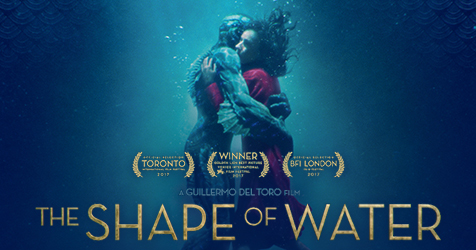
The Shape of Water – Guillermo Del Toro

m-theshapeofwater

A weirdly wonderful, fairy-tale invoking, strangely beautiful film

How to describe the plot of The Shape of Water in one sentence? Well, it’s about a voiceless woman who falls in love with a fish-man. Perhaps not everyone’s cup of tea but you must step into this film with an open mind or you will be confused, disappointed and probably a little scathing. If you go into the film knowing that it’s probably going to be a little bit weird, but preparing to accept, immerse yourself into and believe whatever you see – then you will truly get the most out of this film.

I wasn’t sure about it at first; I had the same scornful reaction as I expect most people did. A woman who falls in love with a fish-man, not really my bag. However, I started to hear the reviews, I watched the trailer, I listened to the chat about the film and I was eventually swayed from not-too-sure to absolutely desperate to see the film. I put aside any prejudices I had against fish-men and went into the film with the frame of mind that this was going to be weird but I should just accept it and allow myself to be swept away by the magic of the film and The Shape of Water is truly magical.

Much of this can be attributed to Alexandre Desplat’s beautiful score which puts The Shape of Water on the verge of a musical. This succeeds in making the film rhythmical, mystical and fairy-tale like. The set and wardrobe bear colours which feel both vivid and dull at the same time. Lastly, the story itself, dealing with such fictitious and fantastic elements to the backdrop of a very real 1960s cold war America, can only make the film feel over-worldly and magical.

Having just written my review of Ladybird where I described the acting as faultless, I am sorry to use the same description again, but there is no better way of describing the acting in The Shape of Water. Again, I won’t mention absolutely everyone but absolutely everyone is deserving of a mention, from the young lad serving pies to Dr Hoffstetler, the empathetic Russian spy. However, I will choose to be obvious and mention the most memorable performances – Octavia Spencer as colleague and friend, Richard Jenkins as closeted gay neighbour and failed artist are both wonderful, lovable and believable at every second. Michael Shannon is a disturbing and, at moments, disgusting villain who, contrary to certain opinions, is not two-dimensional and is not wholly evil.

Then, of course, Sally Hawkins, gives the performance of a lifetime. To play a mute requires complete acting through facial expression and body language. To say that we understand what she is thinking and feeling at any moment is reflective of her acting ability because she is unable to tell us with her words. One of her most powerful moments is a scene where she displays her frustration at not being able to make herself heard, at not being listened to. She signs angrily at Richard Jenkins’ character using her body and her face to say ‘you are not listening to me!’.

Lastly, it would be easy to overlook Doug Jones who has played so many anonymous, thankless roles across his career. In this film, it’s important to acknowledge that he plays the role of Amphibian Man (otherwise known in this review as fish-man) – he literally plays the role of a fish who has manlike qualities and the audience believes him, they root for him and they fall in love with him through Sally’s eyes – that’s no small feat.

I would urge you to go and see The Shape of Water – go with an open mind, go prepared for weirdness, go willing to accept and immerse yourself into whatever you see on the screen and you will get the most out of this beautiful film, totally deserving of its Best Picture Oscar (even if I was rooting for Three Billboards all along).


So, The Shape of Water in three words:

A magical fairy-tale


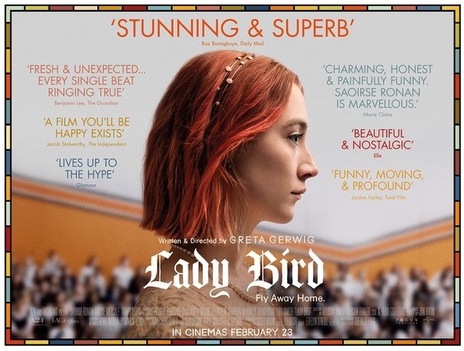
Ladybird – Greta Gerwig

8092_5921

Go and see this film with your mum

No, this is not just a film made by women for women. Ladybird, at the end of the day, is a coming-of-age film that just happens to have been written and directed by a brilliant woman and star, as the lead, another brilliant woman, with lots more brilliant female (and male) supporting roles. But that does not make it a film for women, in the same way that Dunkirk (which to my memory had one female role as a passer-by nurse) is not a film for men. Ladybird has something for everyone and everyone can enjoy it, relate to it and take something away from it. Yes, even a man.

That is the beauty of the film – that it will touch every person in a slightly different way. You, for instance, might feel very touched by the father dealing with depression silently and stoically. Another person might be affected by the young boy dealing with his homosexuality. Another might feel deeply involved in the central friendship, another the central mother-daughter relationship. This is the thing that I found to be most special about Ladybird; that the memories or moments that one person takes away from it, may be entirely different from the memories or moments that another person does.

The other thing that makes Ladybird so special is the fine and perfectly-executed balance between humour and deep emotion. Some moments will have you laughing out loud, some will have tears unwarrantedly leaking from your eyes but at the end of the film, you leave feeling somehow contented. This is partly down to the writing of the film which doesn’t exaggerate the powerful moments of sadness but displays them simply, realistically and, therefore, relatably.

The other part of it is down to the direction and the acting. The acting in this film, in all roles, is faultless. Saoirse Ronan and Laurie Metcalf, who plays her mother, complement each other so well and both have the wonderful ability to display so much emotion through their facial expressions. The mother-daughter relationship has been the most talked about aspect of the film and there is much reason for this. If you can, I would urge you to go and watch this film with your mother, especially as I am writing this on the UK Mother’s Day – go and watch Ladybird with your mum and you might just share something really special.

Mentioned much less often but acted no less well are Tracy Letts (the dad), Julie Macpherson (the best friend), Lucas Hedges (the first love) and Stephen Henderson who starred as Father Leviatch and had, for me, one of the most powerful, beautiful and touching moments of the film. In fact, I could list every member of the cast as I truly thought they were all brilliant.

All in all, Ladybird is an amazing piece of work. If you go to see it, you will laugh and you will most probably cry and, more importantly, you will watch something really special.


So, Ladybird in three words:

Special, relatable, universal


La Belle Sauvage: The Book of Dust Volume One – Philip Pullman

220px-La_Belle_Sauvage

The adventure continues

If you are a fan of His Dark Materials, you will love this. The book is a prequel to The Northern Lights and it follows Malcolm and Alice alongside their daemons, Asta and Ben, as they must protect baby Lyra and Pantalaimon from the Authorities. The book gave me everything I would want from an His Dark Materials spin-off – it gave me small connections to previous books without debasing what has come before and it gave me characters that are just as loveable, admirable and memorable as Lyra and Will.

His Dark Material fans will come across names and characters that you recognise from Lord Asriel to Mrs Coulter to Coram Van Texel. You will come across places you recognise like Lyra’s Oxford and, specifically, Lyra’s Jordan. For a fan, this is enough to make you giddy. Yet whilst you long to hear more and see more of previous books, Pullman refrains from giving you too much, consequently making La Belle Sauvage a novel in its own right.

Whilst not necessarily the most critically-acclaimed genre of literature, Young Adult Fiction is one of my absolute favourites to read. More often than not, it is the literature that most captures my mind and heart; it is the literature where I love the characters, where I cannot stop thinking about them and where I long for the next book to be written. His Dark Materials is no different; it has a special place in my heart as some of the YA fiction that I grew up loving. I almost speed read La Belle Sauvage, it instilled that same sense of enthusiasm in me; I simply didn’t want to put it down and I can’t wait for volume 2.

This isn’t to say that the book is without its faults, there are some parts which I felt drawn out or unimaginative. There were obstacles put in Malcolm’s and Alice’s way which felt unnecessary and not very consistently developed (e.g. giant and fairy). Whilst I didn’t hate the romantic aspect of the novel, I can’t help but thinking it would have been nice for there not to be a love interest between the young male and young female protagonists.

Where I thought Pullman excelled was in creating a main character who is just as loveable as Lyra. Pullman has also always been praised for writing well-rounded, strong, clever female characters and Le Belle Sauvage is no exception, my only comment is that Hannah Relf is extremely similar to Dr Mary Malone from His Dark Materials, and that there can be scholarly women who are in relationships (this could also have been purposeful).

Lastly, I thought there was a certain adultness to La Belle Sauvage which was either missing from the previous books or, perhaps, I was too young to understand. The book touches on the topic of sexual perversion and sexual assault. It also touches on the mental health that accompanies this (the extremely dark moment where a man harms his own daemon).

All in all, I loved La Belle Sauvage. For fans, it keeps the adventure alive, for those not acquainted with His Dark Materials, it exists as an exciting and enrapturing novel in its own right.


So, La Belle Sauvage in three words:

Heart-warming, exciting, addictive